Timing the Table: How to Get Everything Hot at Once
The countdown method professional kitchens use to land every dish at the table warm, at the same moment, without a single frantic scramble.
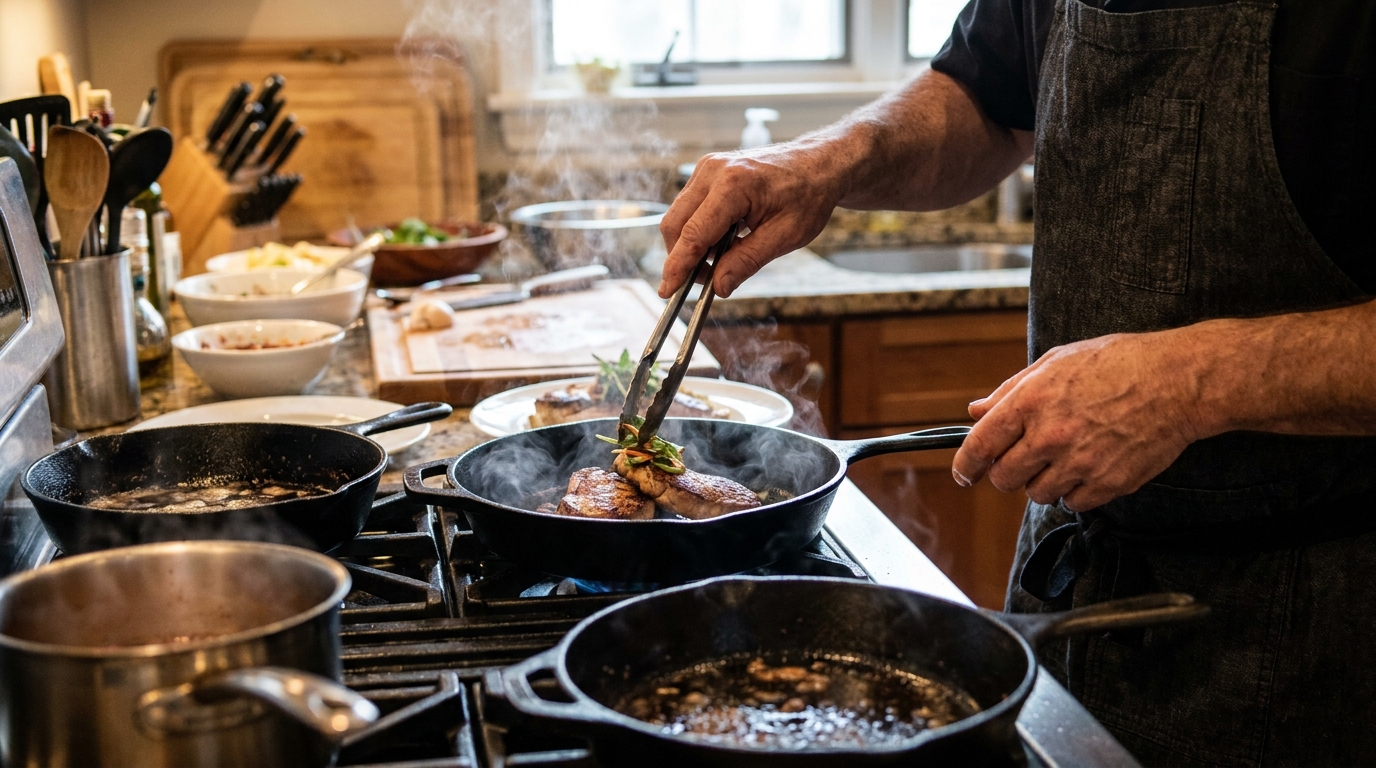
Why should you cook backward from serving time?
The hardest part of a meal is almost never a single dish. It is landing all of them at the table hot at the same moment. Home cooks tend to start with the recipe that scares them most and hope the rest falls into place. It rarely does. The roast finishes twenty minutes before the potatoes, the vegetables go cold waiting on the sauce, and the salad gets dressed while everyone is already sitting.
Professional kitchens solve this by thinking in reverse. You do not start with what to cook first. You start with when you want to eat, and you work backward from there. Every dish gets scheduled by how long it takes and how well it holds. Set the finish line, then place each task so it crosses at the right time. Once you cook this way, the panic goes away, because the timing is on paper instead of in your head.
How do you build the countdown?
Start by choosing a serving time. Call it 7:00. Now list every dish and, next to each, two numbers: how long it takes to cook, and how long it can safely wait once done. Then place each one on a timeline that ends at 7:00.
Work from the longest and least flexible items outward. A roast that needs ninety minutes plus a rest sets your earliest start. Something quick and fragile, like green beans or a pan sauce, lands closest to serving. A sample countdown for a roast dinner might read:
- 5:00 Roast into the oven.
- 6:15 Potatoes in to roast.
- 6:30 Roast out, tented to rest. Oven turned up for the potatoes.
- 6:45 Vegetables on the stovetop. Warm the plates.
- 6:52 Make the pan sauce from the resting juices.
- 6:57 Carve. Dress the salad.
- 7:00 Plate and serve.
Write it down. Tape it to a cabinet at eye level. The point of a written countdown is that you stop trusting your memory during the exact window when you have the least attention to spare. Glance up, see the next move, do it.
How do you choreograph the oven and stovetop?
Your oven and your burners are your limited resources, so plan them like a schedule, not a free-for-all. The most common failure is needing the oven at two temperatures at once, or wanting four burners when you have four pots and no room to stir.
Group dishes by the temperature they need and sequence them. If the roast wants 325 degrees and the potatoes want 425, the roast comes out to rest first, then the oven climbs while the potatoes crisp. That handoff is not a coincidence, it is designed. On the stovetop, think about which pans can share time and which need your hands. A sauce that needs constant whisking should not compete with pasta you are trying to drain at the same second. Stagger them.
A few rules keep the choreography honest. Prep everything before you start cooking, so once the countdown begins you are only cooking, not chopping. Keep one burner and a patch of counter clear as your working space. And do the quiet tasks early, like warming plates and setting out serving spoons, so the last fifteen minutes are only about heat and timing.
Does resting meat really matter for timing?
Resting meat is usually sold as a doneness trick, and it is one. The juices redistribute, the temperature evens out, and the meat carves cleaner. But for a host, resting is something even better. It is a built-in buffer.
A roast or a large cut needs to rest anywhere from ten minutes to half an hour, loosely tented with foil, depending on its size. That window is not dead time. It is the exact stretch you use to finish everything else: crisp the potatoes, cook the vegetables, build the pan sauce from the drippings, warm the bread. The meat is not waiting on you. It is doing you a favor. Build your countdown so the centerpiece comes out early and rests while the fast dishes finish, and the whole meal converges naturally on serving time.
How do you keep food warm without overcooking it?
Not everything finishes at the same instant, so you need a way to hold dishes without cooking them further or drying them out. A few reliable tools:
- Warm the plates. Cold plates steal heat the moment food lands. Stack them in a low oven, around 170 degrees, or on the open oven door, or run them under hot tap water and dry them. Warm plates buy you real minutes at the table.
- Use a low oven as a holding cabinet. Finished dishes hold well at 170 to 200 degrees, loosely covered with foil so they do not dry out. Roasted vegetables, casseroles, and sliced meat all keep here.
- Foil is your friend for resting and holding. A loose tent traps warmth without steaming the crust soft.
- Hold sauces over the lowest heat or in a warm spot, whisking occasionally, and loosen with a splash of stock if they tighten.
What you should not do is leave finished food naked on the counter. Ten minutes there and it is lukewarm. If a dish is done and serving is still a while off, get it into the warm oven.
What order should you plate in?
Plating is the last and most rushed step, so give it an order instead of grabbing at random. Plate the things that hold heat first and the things that cool fastest last. A dense mound of mashed potatoes or a slice of roast stays warm far longer than a thin fillet of fish or a spoon of delicate vegetables, so those go down last, closest to the moment the plate leaves your hand.
Get the plates lined up, warmed, and within reach before you start. Move down the line the same way for each one so you do not lose your place. Sauce goes on right before the plate goes out, not while it sits waiting. And carry plates to the table in batches, or recruit a guest to help, so the first person served is not finishing while the last is still empty.
What do you do when the timing slips?
It will slip. The roast runs long, a guest is late, a pan misbehaves. The countdown is a plan, not a straitjacket, and its real value is that it tells you instantly what to adjust. If the meat needs more time, everything with a hold window can wait in the warm oven while it finishes. If a guest is running twenty minutes behind, slide the whole timeline and let the roast rest longer, which harms nothing. Because you wrote the plan down, you can see the slack and use it. That is the difference between a hiccup and a disaster. Keep your head, look at the paper, move the next piece, and bring it all to the table hot.
Cook the recipes from this post
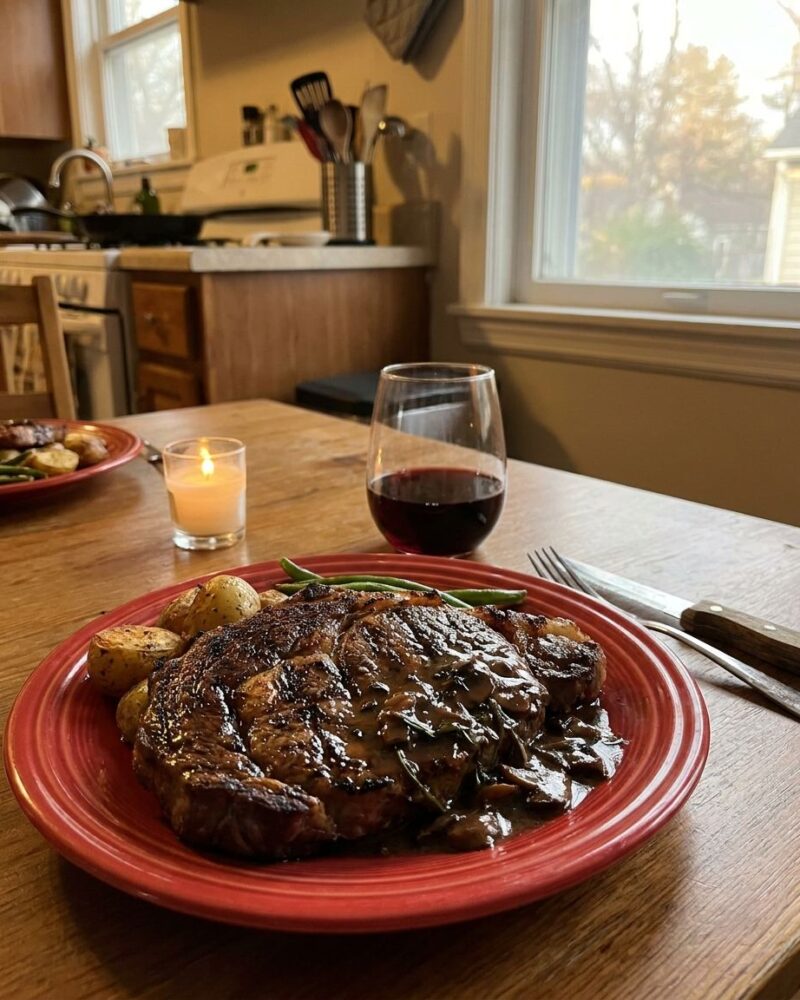
Steak Diane, Flamed in Cognac
A high-heat sear and a mushroom-cognac pan sauce that comes together before the steak finishes resting.
Get the recipe →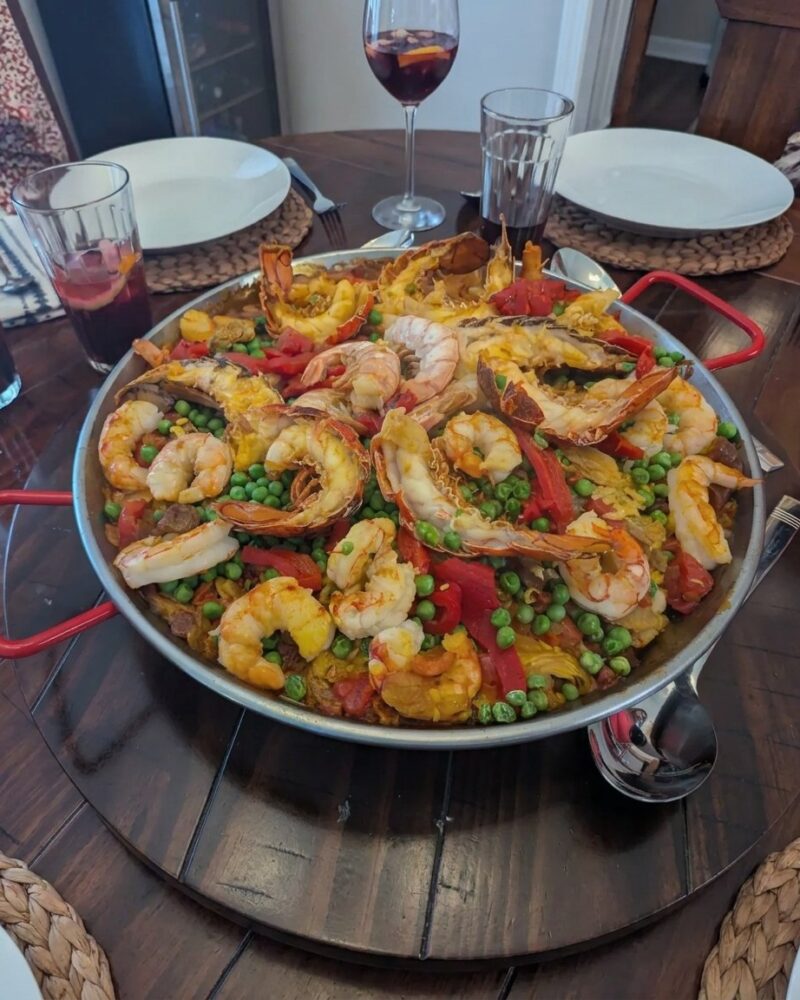
Seafood Paella
Saffron-stained rice studded with shrimp, mussels, and squid, all of it crowned by the prized crackle…
Get the recipe →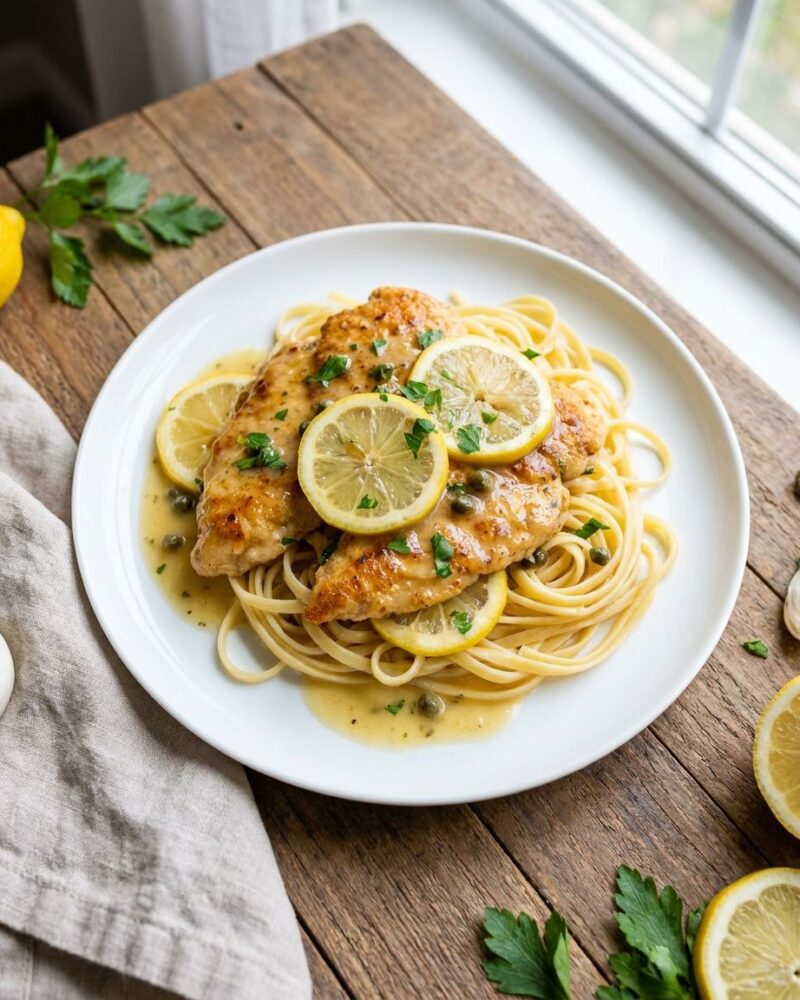
Chicken Piccata with Tri-Colored Farfalle Alfredo
Golden cutlets meet a bright lemon-caper pan sauce over ribbons of creamy tri-colored farfalle.
Get the recipe →Related posts from the kitchen.

How to Cook for Company and Actually Enjoy the Night
The secret to a great dinner party is not a better recipe. It is a plan that lets you leave…
Read the post →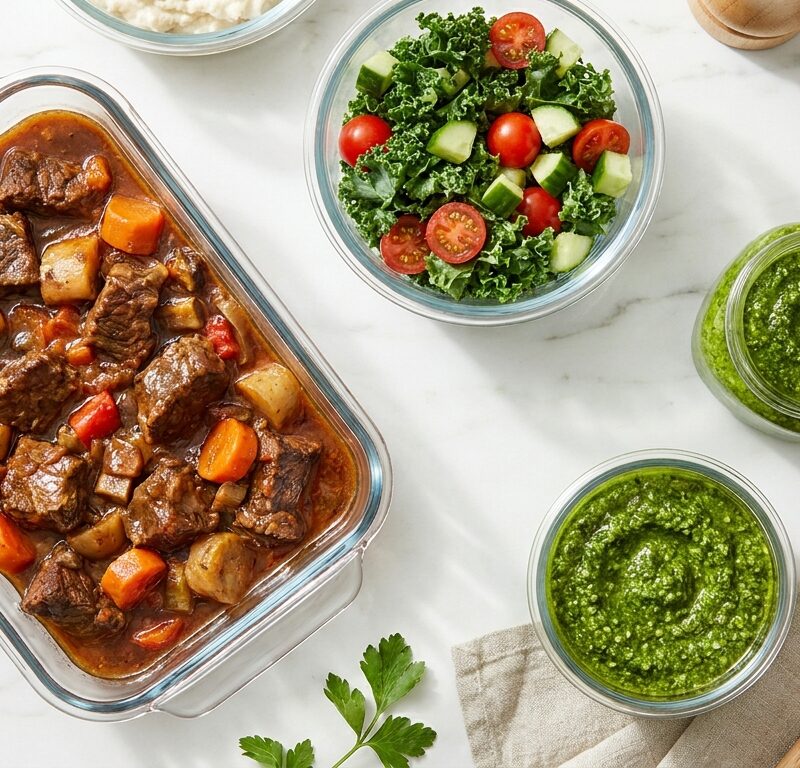
The Make-Ahead Menu: Dishes That Wait for You, Not the Other Way Around
Build a menu around food that gets better sitting in the fridge, so the only thing you cook when guests…
Read the post →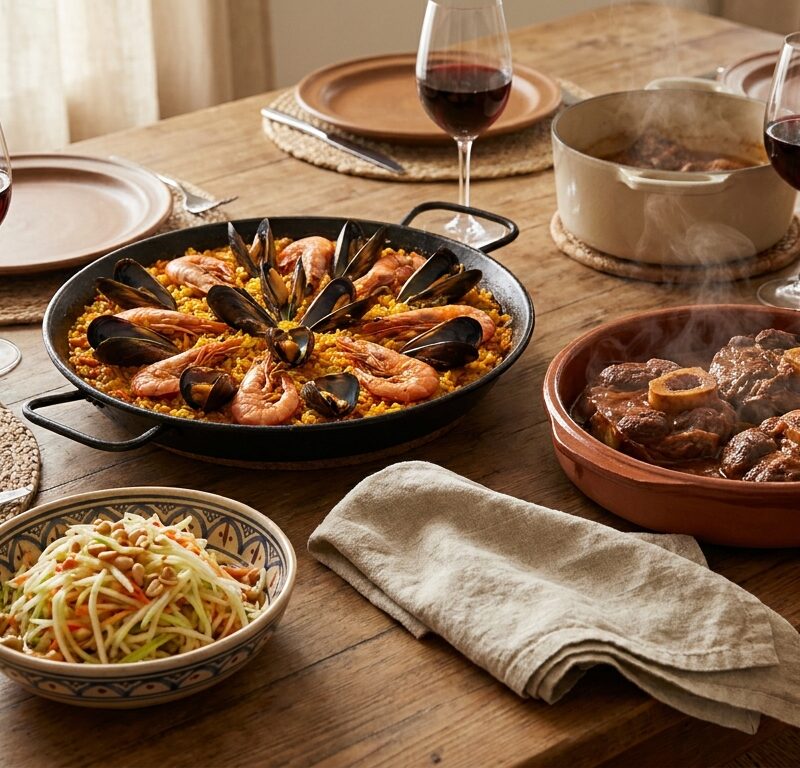
A Dinner Party Menu You Can Actually Pull Off
A four-course dinner party menu built for one showstopper and a lot of make-ahead calm, so you cook like a…
Read the post →