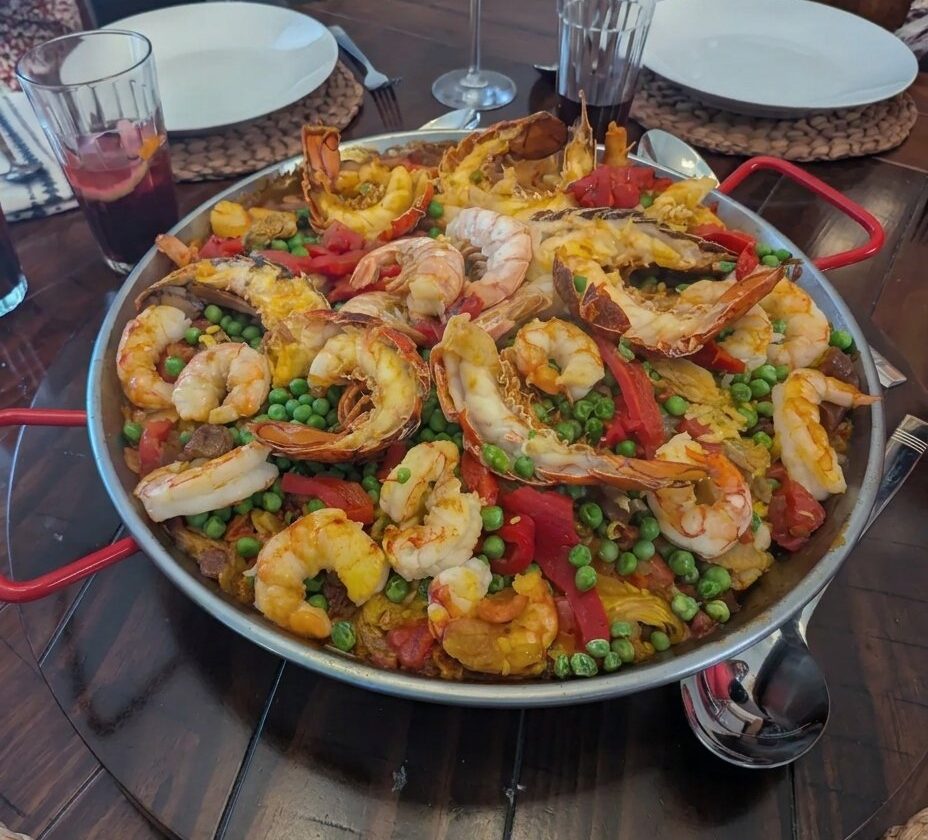
Seafood Paella
Saffron-stained rice studded with shrimp, mussels, and squid, all of it crowned by the prized crackle of a golden crust on the bottom.
By Steven Russell
Spanish
Saffron-stained rice studded with shrimp, mussels, and squid, all of it crowned by the prized crackle of a golden crust on the bottom.
Paella rewards patience more than skill. There is no fancy knife work and no tricky sauce, just a handful of decisions made at the right moments: the right pan, rice that is left alone long enough to form a crust, and seafood added in the right order so nothing overcooks.
That crust has a name, the socarrat, and it is the whole point. It forms only if you resist stirring once the rice starts to simmer, letting the bottom layer toast against the hot pan while the grains above cook in saffron stock. Stir it and you get risotto; leave it and you get paella.
This is food built for a crowd and a slow afternoon. Set the pan in the middle of the table, add lemon and parsley, open something cold, and let people serve themselves straight from the pan.
Warm the seafood or chicken stock in a small pot and crumble the saffron threads into it to steep.
Why Steeping saffron in warm liquid draws out its color and aroma, so the whole pan of rice takes on that gold, not just a few grains.Heat the olive oil in a paella pan over medium-high heat until it shimmers.
Why A wide, shallow paella pan spreads the rice into a thin layer, which is what lets the crust form evenly across the bottom.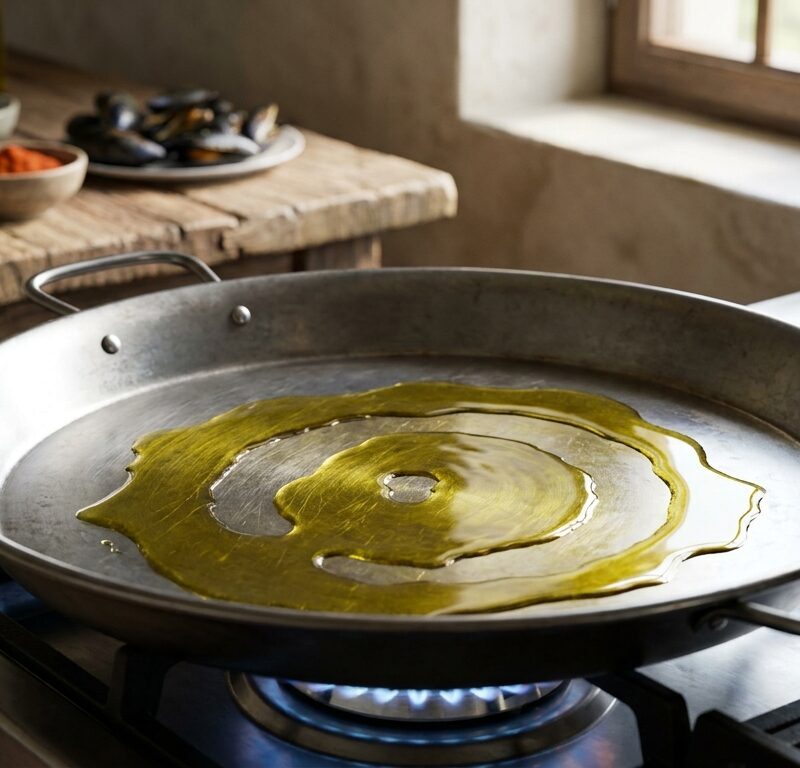
Saute the diced onion, garlic, and sliced bell pepper until softened, about 5 minutes.
Why This sofrito is the flavor foundation of the dish. Softening the vegetables gently builds sweetness before the tomatoes go in.Add the diced tomatoes and smoked paprika and cook for about 5 minutes more, until the mixture darkens and thickens.
Why Cooking the tomato down concentrates it and blooms the paprika, deepening both the color and the flavor of the base.Stir in the rice and cook for about a minute, coating every grain in the sofrito.
Why Toasting the rice briefly in the flavored oil seals the grains so they stay distinct instead of turning to mush.Pour in the warm saffron stock, spread the rice into an even layer, and do not stir again from this point on.
Why This is the rule that makes paella. Stirring releases starch and prevents the socarrat, the crisp bottom crust, from forming.Simmer uncovered for about 10 minutes, keeping the heat steady.
Why An uncovered simmer lets liquid evaporate at the right pace so the rice cooks through and the bottom begins to set.Nestle the shrimp, mussels, and squid into the rice, tucking the mussels hinge-side down.
Why Adding the seafood partway through means it cooks just long enough to be tender rather than rubbery. Mussels set hinge-down open upward as they steam.Cook for another 8 to 10 minutes, until the rice is tender, the mussels have opened, and a crust forms on the bottom.
Why Listen for a gentle crackle and smell for a light toastiness; that is the socarrat forming. Discard any mussels that stay shut.Let the pan rest for 5 minutes, then finish with lemon wedges and chopped parsley.
Why Resting settles the rice and lets the crust firm up, while the lemon and parsley add the fresh lift the rich dish needs.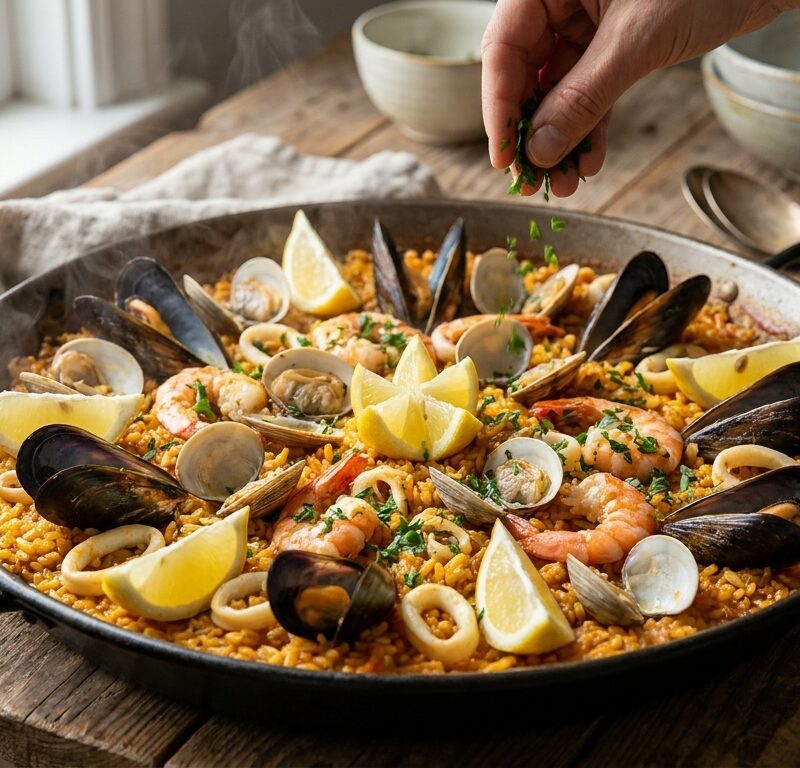
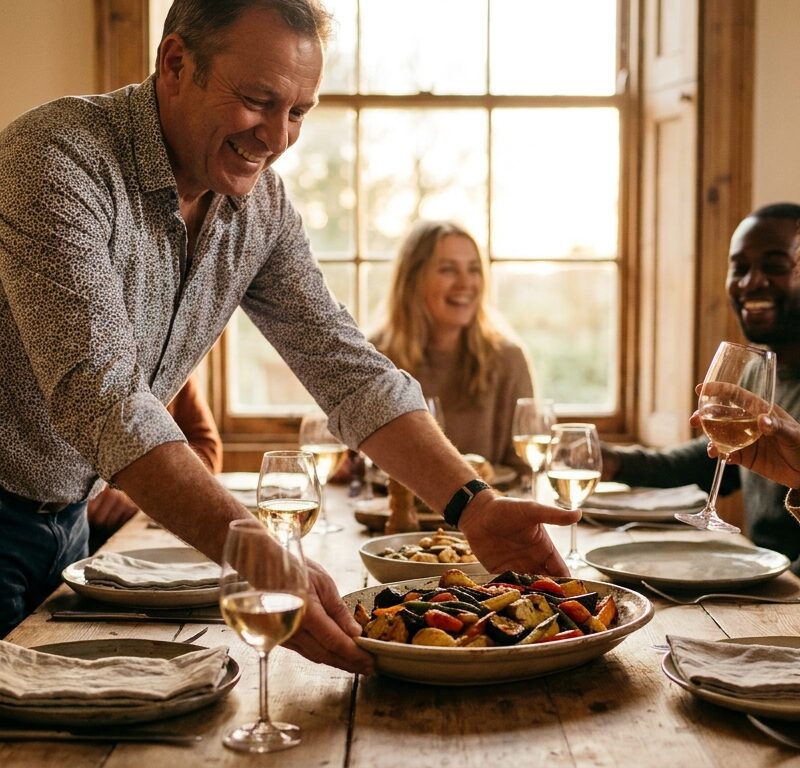
The secret to a great dinner party is not a better recipe. It is a plan that lets…
Read the post →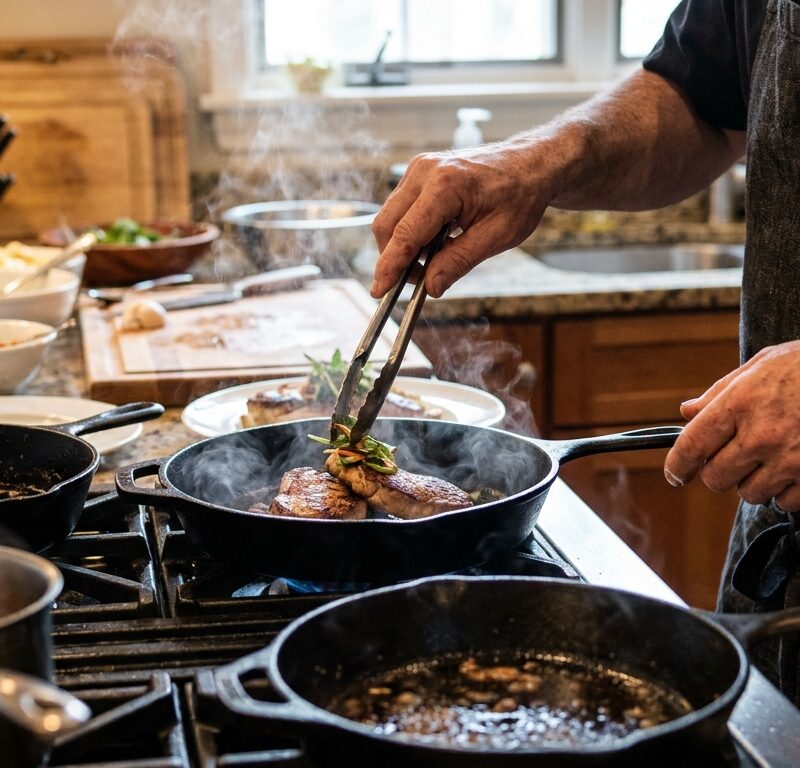
The countdown method professional kitchens use to land every dish at the table warm, at the same moment,…
Read the post →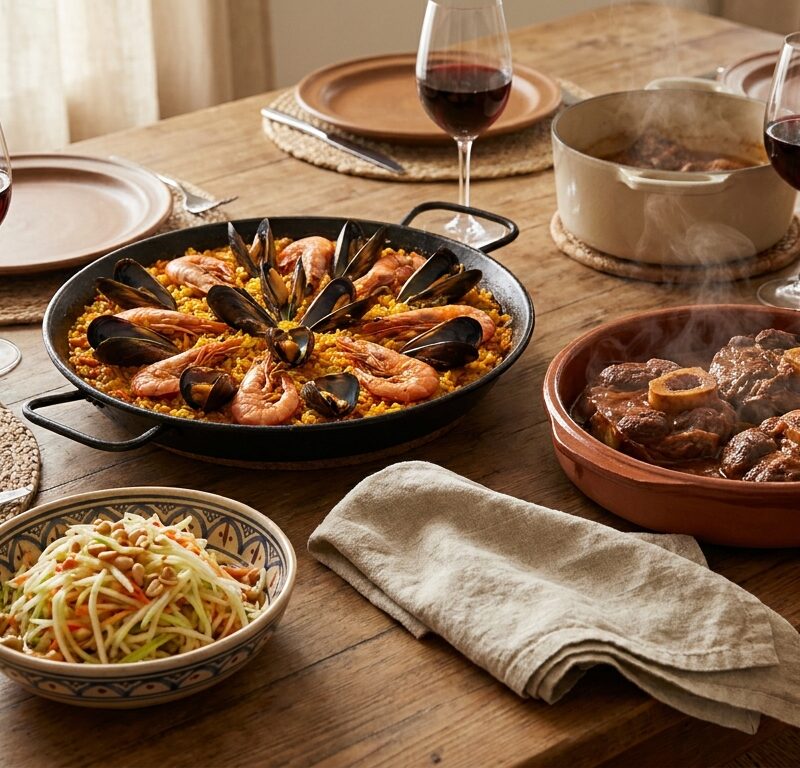
A four-course dinner party menu built for one showstopper and a lot of make-ahead calm, so you cook…
Read the post →Guest-chef Sunday brunches, private dinners, and menu consulting. Tell us the date and the occasion and we send back availability and a suggested menu.
A few details and we reply with dates and a menu idea.