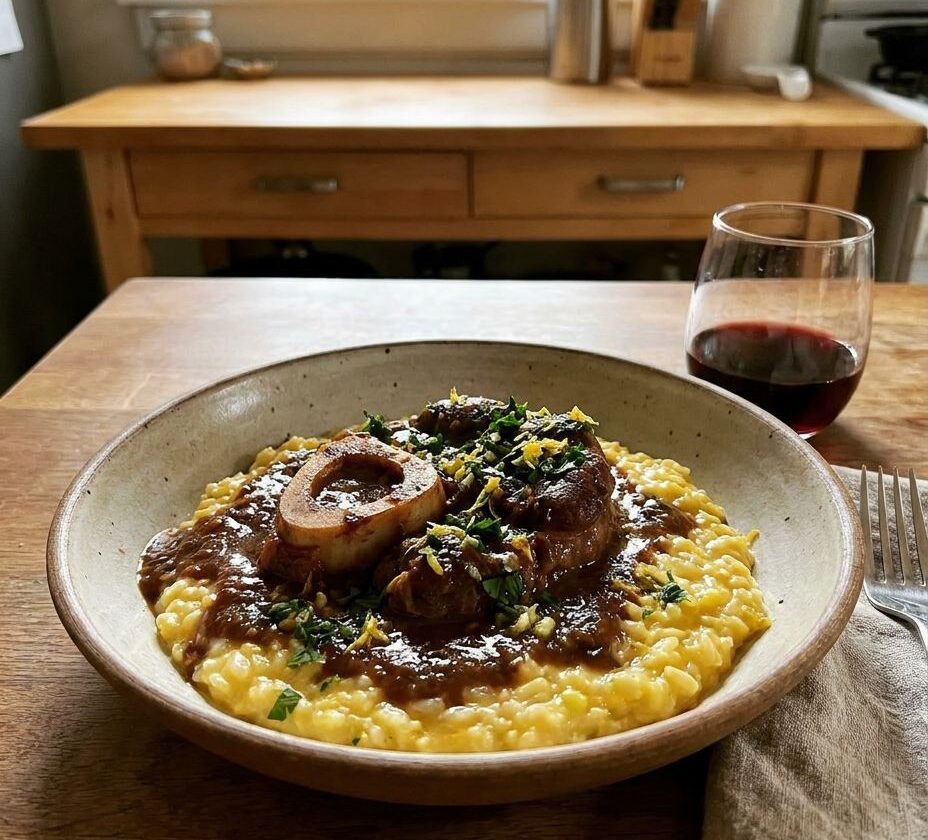
Braised Veal Shanks, Osso Buco
Fork-tender veal falls from the bone into a deep tomato and wine braise, crowned with bright, raw gremolata.
By Steven Russell
Italian
Fork-tender veal falls from the bone into a deep tomato and wine braise, crowned with bright, raw gremolata.
Osso buco is Milanese cooking at its most honest. You sear cross-cut veal shanks hard, build a base of soft vegetables, wine, and tomato, then let the oven do the slow work while the connective tissue melts and the marrow softens in the bone. There is no shortcut here, and there does not need to be. This is a dish that tastes better because you left it alone.
The technique to respect is the braise itself. You want the liquid to come only about halfway up the shanks, so the tops steam and the bottoms simmer, and the whole thing self-bastes under a lid. Keep the oven low and steady around 325F so the meat surrenders slowly instead of seizing up.
What lifts it out of the ordinary is the gremolata, that raw mix of lemon zest, parsley, and garlic scattered over the top just before serving. After hours of rich, mellow braising, it cuts through with sharp citrus and a green bite. It is not a garnish you can skip. It is the reason the dish stays lively to the last forkful.
Preheat the oven to 325F and set a rack in the lower third so the Dutch oven sits with room above it.
Why A low, steady oven melts the collagen slowly. Too hot and the meat tightens instead of turning tender.Pat the tied veal shanks dry, season all over with salt and black pepper, then dredge them in flour and shake off the excess.
Why A dry, floured surface browns faster and deeper, and the flour lightly thickens the braise later.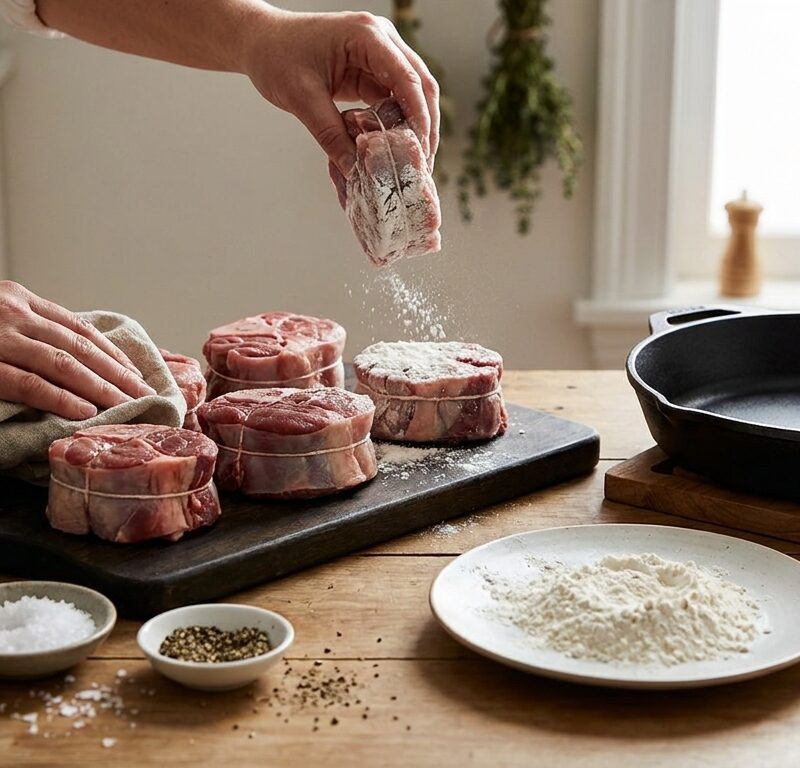
Heat the olive oil in a Dutch oven over medium-high heat and sear the shanks on all sides until well browned, then remove them and set aside.
Why The browned crust is the flavor foundation of the whole braise. Do not crowd the pot or the shanks will steam instead of sear.Lower the heat to medium, add the onion, carrots, and celery, and saute until softened, then stir in most of the minced garlic and cook another minute.
Why This soffritto is the sweet, aromatic backbone. Hold back some garlic now so it stays raw for the gremolata.Pour in the dry white wine and scrape up all the browned bits from the bottom of the pot, letting it reduce for a minute or two.
Why Those stuck-on bits are concentrated flavor. Deglazing lifts them back into the sauce and cooks off the raw alcohol.Add the crushed tomatoes, stock, and bay leaves, then nestle the shanks back in so the liquid comes about halfway up their sides.
Why A half-submerged shank braises and steams at once, which keeps the exposed top from drying while the base goes tender.Cover the pot and braise in the oven for 2 to 2.5 hours, until the meat is falling off the bone and a fork slides in with no resistance.
Why Doneness is about texture, not the clock. Give it the full time if the meat still holds firm.While it braises, chop together the lemon zest, parsley, and reserved garlic to make the gremolata.
Why Making it fresh keeps the zest and garlic sharp. It loses its punch if it sits too long.Serve the shanks over risotto, spoon the braising sauce around them, and scatter the gremolata over the top.
Why The raw gremolata against the rich braise is the signature contrast of this dish. Add it at the table so it stays bright.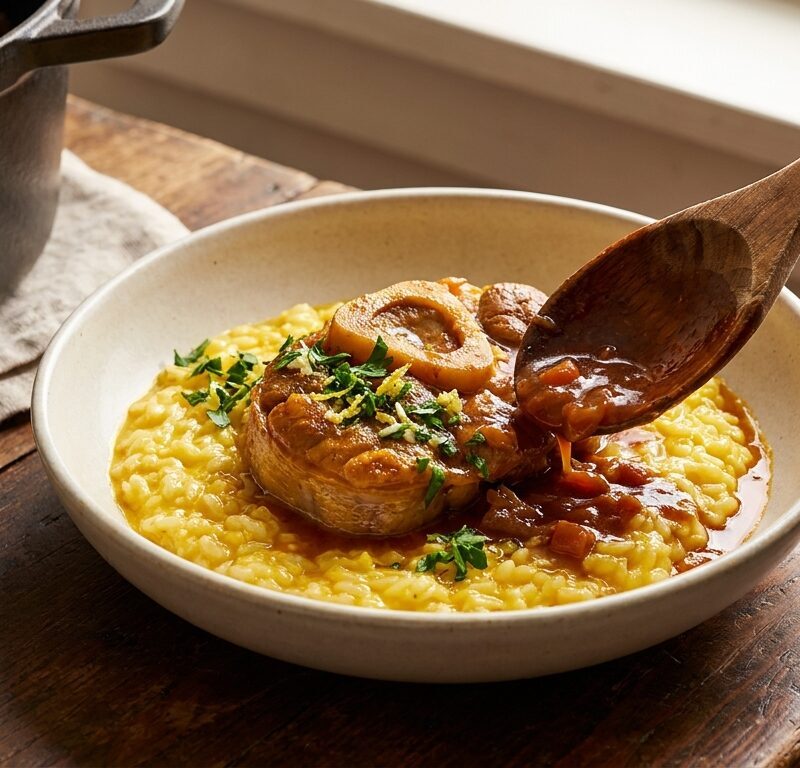

The secret to a great dinner party is not a better recipe. It is a plan that lets…
Read the post →
Build a menu around food that gets better sitting in the fridge, so the only thing you cook…
Read the post →
How to host memorable dinners in Palm Desert from November through April, when the desert fills up and…
Read the post →Guest-chef Sunday brunches, private dinners, and menu consulting. Tell us the date and the occasion and we send back availability and a suggested menu.
A few details and we reply with dates and a menu idea.